Can Eye Strain Cause Headaches, Dizziness, or Nausea?
By Dr. Daniel O'Dowd • October 1, 2026
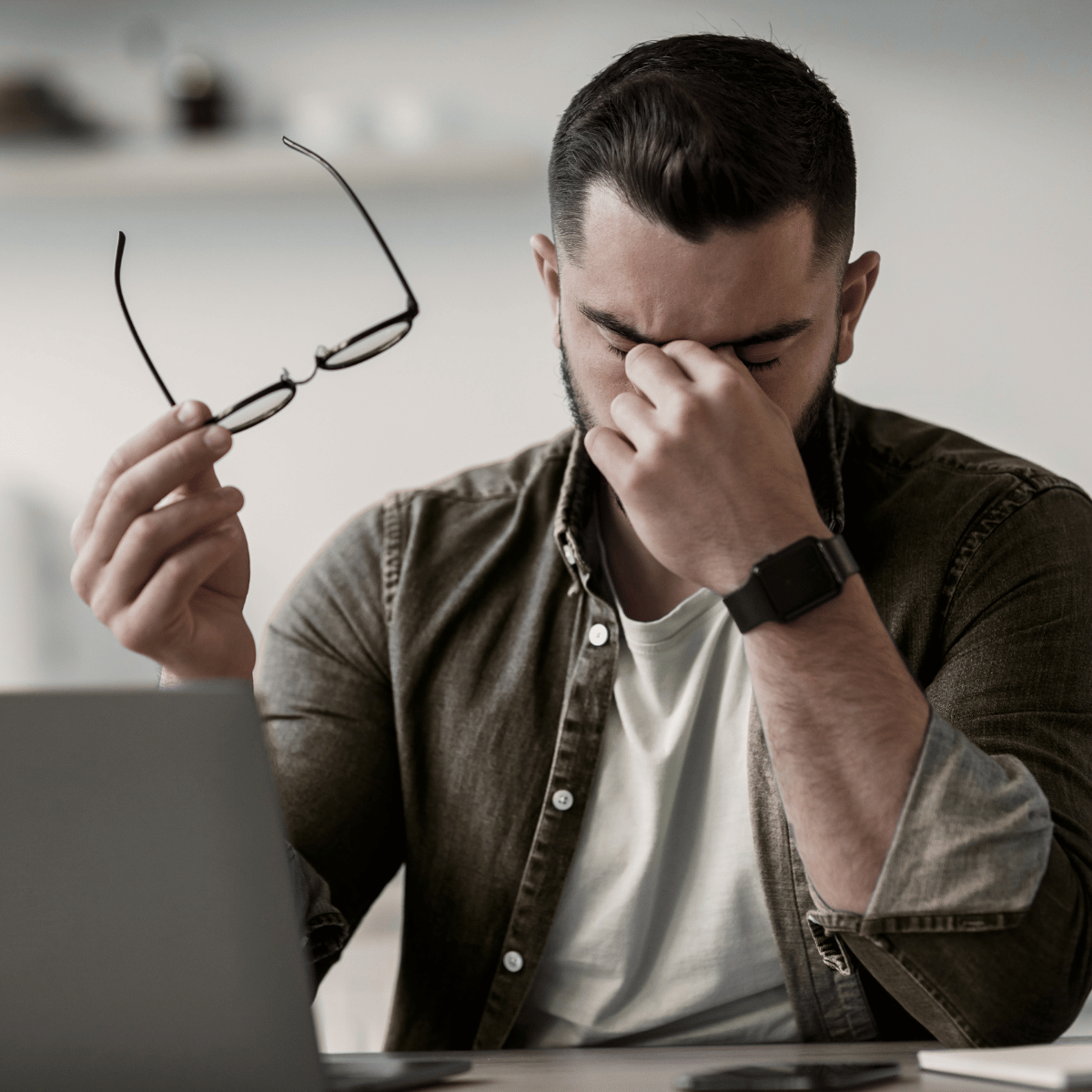
Can eye strain cause headaches? What about dizziness or nausea?
An eye strain headache tends to arrive the same way every time. You have been at your desk since morning, and somewhere around mid afternoon a dull ache settles in behind your eyes and spreads across your forehead. Sometimes, when you finally look up from the screen, the room feels slightly unsteady. Your stomach turns a little. None of it feels serious enough to stop what you are doing.
Because these symptoms show up in different parts of your body, most people treat them as separate problems. They take something for the headache, blame the dizziness on skipping lunch, and keep working. In reality, your visual system, your balance system, and your nervous system are far more connected than most people realize. When your eyes are working overtime, the effects rarely stay in your eyes.
In this blog, we explore whether eye strain can genuinely cause headaches, dizziness, and nausea, where eye strain pain usually shows up, and the warning signs that mean your symptoms deserve a professional evaluation rather than another cup of coffee.
What Does Eye Strain Actually Feel Like?
Asthenopia, the clinical term for eye strain, describes what happens when your eyes are pushed through long stretches of demanding visual work without enough recovery. It is not a disease. It is a fatigue response, and it is extremely common.
According to the American Optometric Association, digital eye strain, also called computer vision syndrome, is a group of eye and vision related problems that result from prolonged use of computers, tablets, e-readers, and phones, and the level of discomfort increases with the amount of screen time. People who spend two or more continuous hours a day on a digital device are at the greatest risk.
The Cleveland Clinic notes that this kind of visual fatigue is not limited to screens. Reading, detailed close work, and long drives can produce the same fatigue. The symptoms most people notice include:
- Sore, tired, burning, or itching eyes
- Blurred vision or occasional double vision
- Dry eyes or watery eyes
- Light sensitivity
- Difficulty keeping your eyes open
- Headache
- Neck, shoulder, and upper back discomfort
Can Eye Strain Cause Headaches?
Yes. Headache is one of the most consistently reported symptoms of digital eye strain. The American Optometric Association lists headaches alongside eyestrain, blurred vision, dry eyes, and neck and shoulder pain as the core symptom cluster of the condition.
The reason comes down to muscle work. Focusing on something close requires your eye's internal focusing muscle to contract and hold, and it requires both eyes to rotate slightly inward and stay aligned. Reading a screen for eight hours means holding that effort for eight hours. A systematic review published in Ophthalmology, the journal of the American Academy of Ophthalmology, describes eye strain symptoms as commonly including headache and notes that these symptoms do not always resolve at the end of the working day.
There is a second, more mechanical contributor. When text is small, contrast is poor, or a prescription is slightly off, people squint. Squinting recruits the muscles of the brow and forehead, and hours of low grade tension in those muscles produces exactly the kind of ache people describe as an eye strain headache.
Eye Strain Headache Location: Where the Pain Shows Up
Eye strain pain has a recognizable geography. Most people feel it behind or directly around the eyes, across the brow line, or in the temples. Some feel it at the back of the head. The clinical literature on binocular vision problems describes both frontal and occipital headaches, meaning front of the head and back of the head, in patients whose eyes struggle to work together at near distances.
Neck and shoulder tightness often travels with it. EyeWiki, the American Academy of Ophthalmology's clinical reference, groups neck pain, neck stiffness, headache, and backache together as the extraocular symptoms of computer vision syndrome, which is why posture and workstation setup matter as much as your prescription.
The most useful clue is timing rather than location. An eye strain headache builds through the day, worsens with sustained near work, and eases within a few hours of resting your eyes. A headache that is present when you wake up, or one that has nothing to do with visual tasks, is pointing somewhere else.
Can Eye Strain Cause Dizziness?
This one surprises people, but yes, it can! Your brain keeps you balanced by combining three streams of information: what your eyes see, what your inner ear senses about motion and gravity, and what your muscles and joints report about your body's position. Vision carries a heavy share of that load. When the visual signal is effortful, unstable, or slightly mismatched between the two eyes, the brain receives conflicting information and can interpret it as unsteadiness.
Research supports the connection. A study published in the National Library of Medicine examined children with unexplained dizziness and found that vergence disorders, meaning problems with how the eyes converge on near targets, could generate dizziness on their own. After orthoptic treatment and instructions to reduce screen exposure, vertigo symptoms resolved in all of the patients studied and eye movement measurements improved significantly.
The American Optometric Association also lists problems with motion sickness and vertigo among the symptoms associated with convergence insufficiency, a condition where the eyes tend to drift outward during close work.
Can Eye Strain Cause Nausea?
Nausea from visual fatigue is less common than headache, but it is documented, and the mechanism is the same one behind motion sickness. When your visual system and your balance system disagree, the brain responds with the queasy, unsettled feeling most people associate with reading in a moving car.
A clinical review of convergence insufficiency published in the Kerala Journal of Ophthalmology identifies nausea, motion sickness, dizziness, and generalized fatigue as less common symptoms of the condition, appearing alongside the more familiar complaints of eyestrain, headache, blurred vision, and double vision.
Here is the part worth paying attention to. Ordinary screen fatigue does not usually make people nauseated. When nausea shows up with eye symptoms, it is more often a signal that something specific is going on with how your eyes coordinate, or in rarer cases that the cause is something other than screen fatigue.
When It Is Not Just Eye Strain
Several conditions produce headache, dizziness, or nausea that people reasonably mistake for screen fatigue.
An Uncorrected or Outdated Prescription
The American Optometric Association points out that even minor uncorrected vision problems can significantly affect comfort and performance during screen work. A small amount of astigmatism or farsightedness that causes no obvious blur can still force your focusing system to work continuously, and that constant effort is a classic source of daily headaches.
Convergence Insufficiency
This is a binocular vision disorder in which the eyes have difficulty turning inward together to focus on something close. The National Library of Medicine lists eye strain, double vision, headaches, blurred vision, the sensation of print moving on the page, and difficulty with reading comprehension as its common symptoms.
One detail is worth knowing before your next appointment. The American Optometric Association notes that most routine eye exams do not include specific testing for convergence insufficiency, so describing your symptoms in detail is what prompts your doctor to add that testing. So if reading or close work leaves you dizzy or queasy, tell your eye doctor at the start of the exam rather than waiting to be asked.
Dry Eye
Dry eye and visual fatigue feed each other. People blink significantly less while concentrating on screens, which destabilizes the tear film and produces burning, fluctuating vision, and the fatigue that leads to squinting. If your symptoms are worse in dry indoor air or late in the day, dry eye may be part of the picture. Our dry eye care team can evaluate whether that is what is driving your discomfort.
Eye Strain, Migraine, or Emergency? How to Tell Them Apart
Three explanations account for most cases of headache paired with eye symptoms, and they behave differently enough to tell apart once you know the pattern.
Eye Strain
The defining feature is its relationship to what you are doing. It builds during sustained visual work, worsens the longer you continue, and eases within a few hours once you stop. Nausea is uncommon and mild if it appears at all. Rest, regular screen breaks, and an accurate prescription usually resolve it.
Migraine
Migraine can build slowly or arrive quickly, sometimes preceded by warning signs such as flashing lights or zigzag patterns in your vision. The pain is often on one side of the head and throbbing rather than dull, light sensitivity is pronounced, and nausea is common. Screen use is a well recognized trigger, which is exactly why migraine and eye strain get confused. The difference is that stepping away from the screen reliably helps eye strain and often does not resolve a migraine. For people with light-sensitive migraine, migraine glasses such as Avulux, which are available through Fuquay Eye Care, may also help manage light exposure and provide relief from light-related discomfort. Persistent or severe migraines may require evaluation and care from a neurologist.
Acute Angle Closure Glaucoma
This one is a medical emergency and should never be waited out. The American Academy of Ophthalmology describes the signs of an acute angle closure glaucoma attack as sudden blurry vision, severe eye pain, headache, nausea, vomiting, and rainbow colored rings or halos around lights. Angle closure glaucoma can cause blindness if it is not treated right away.
If you have that cluster of symptoms, particularly severe pain in one eye with halos around lights and vomiting, seek emergency care immediately rather than scheduling an appointment. Screen fatigue does not cause severe pain, and it does not cause halos.
When to Schedule an Eye Exam
Short of an emergency, book a comprehensive exam if any of the following describe you:
- Headaches that occur most days, or that start early in the day before screen use
- Dizziness or nausea that reliably accompanies reading or close work
- Double vision, or words that seem to move or swim on the page
- Blurred vision that does not clear after resting your eyes
- Symptoms that persist despite consistent screen breaks and workstation changes
- More than a year since your last comprehensive eye exam
How to Relieve an Eye Strain Headache
Most visual fatigue responds well to changes you can make today. The American Optometric Association recommends the 20-20-20 rule as a starting point: every 20 minutes, look at something 20 feet away for 20 seconds. It gives your focusing system a genuine break, which is the thing screen breaks spent on your phone do not provide.
- Fix the glare. Match your screen brightness to the light in the room and reposition your monitor so windows and overhead lights are not reflecting off it.
- Raise your font size. Squinting to read small text is one of the most avoidable sources of brow tension.
- Set the screen properly. Keep your monitor at or slightly below eye level, roughly an arm's length away, with your back supported and your feet flat.
- Blink deliberately. Concentration suppresses blinking. Preservative free artificial tears help when your eyes feel gritty by afternoon.
- Update your prescription. A prescription that was right two years ago may be quietly costing you a headache a day now.
If your eyes feel tired even after a full night of sleep, that is a slightly different problem with its own set of causes, and we covered it in detail in a separate post.
How Long Does an Eye Strain Headache Last?
For most people, symptoms fade within a few hours of resting the eyes. Mayo Clinic describes eyestrain as annoying but usually not serious, resolving once you rest your eyes or take other steps to reduce discomfort. It also notes that in some cases the symptoms point to an underlying eye condition that needs treatment.
The Ophthalmology review referenced earlier makes a related observation worth taking seriously: because computer use is constant for most adults, these symptoms tend to be recurrent, and they can progress. A headache that returns every single workday is not something to keep absorbing. It is information.
Is Eye Strain Dangerous?
Visual fatigue itself does not damage your eyes. What makes it worth attention is that it is a symptom, and symptoms can have more than one source. The Cleveland Clinic advises that if you cannot relieve eye strain through lifestyle changes, there is a chance it may be a sign of something more significant than eye fatigue, which is why an eye exam is always a reasonable step.
Eye Exams and Digital Eye Strain Care in Fuquay-Varina
If headaches, dizziness, or nausea have become a regular part of your workday, you do not have to figure out the cause on your own. At Fuquay Eye Care, we evaluate how your eyes focus and work together, review your screen habits and workstation setup, check your prescription, and look for the underlying conditions that get missed in a quick vision screening.
Learn more about our approach to digital eye strain, or schedule a comprehensive adult or senior eye exam to get answers.
Call us at 919.557.0308 or book online. We are located at 505 North Judd Parkway NE in Fuquay-Varina.
Frequently Asked Questions: Digital Eye Strain
Can eye strain cause headaches every day?
It can, if the underlying cause is present every day. Daily screen work with an outdated prescription, an untreated focusing problem, or poor workstation ergonomics produces daily symptoms. Daily headaches are a reason to be evaluated rather than a normal cost of office work.
Where does an eye strain headache hurt?
Most often behind or around the eyes, across the brow, or in the temples. Some people also feel it at the back of the head or as tightness through the neck and shoulders. The pain typically builds during near work and eases with rest.
Can eye strain cause dizziness and nausea at the same time?
Yes, though this combination is less common than headache alone. It usually points to a binocular vision issue affecting how the eyes coordinate at near distances, which creates a mismatch between your visual and balance systems. It is worth mentioning specifically to your eye doctor.
How long does an eye strain headache last?
Typically a few hours after you stop the visual task. Symptoms that persist into the next morning, or that return every workday, suggest an underlying cause that rest alone will not resolve.
Can glasses fix eye strain headaches?
Often, yes. If an uncorrected refractive error is driving the strain, an accurate prescription addresses the root cause. Some people benefit from a dedicated computer prescription set for screen distance. An exam is what determines which applies to you.
Is eye strain dangerous?
Eye strain does not damage your eyes. The concern is that similar symptoms can come from conditions that do require treatment, so persistent symptoms should be evaluated rather than managed indefinitely at home.
Discounts?
Yes please!
Get more info about our VisionVantage program for discounted rates on services and eye wear.
Contact Us
We will get back to you as soon as possible.
Please try again later.
SHARE THIS
Latest Posts