Why Do My Eyes Feel Tired Even After a Full Night's Sleep?
By Dr. Daniel O'Dowd • February 9, 2026

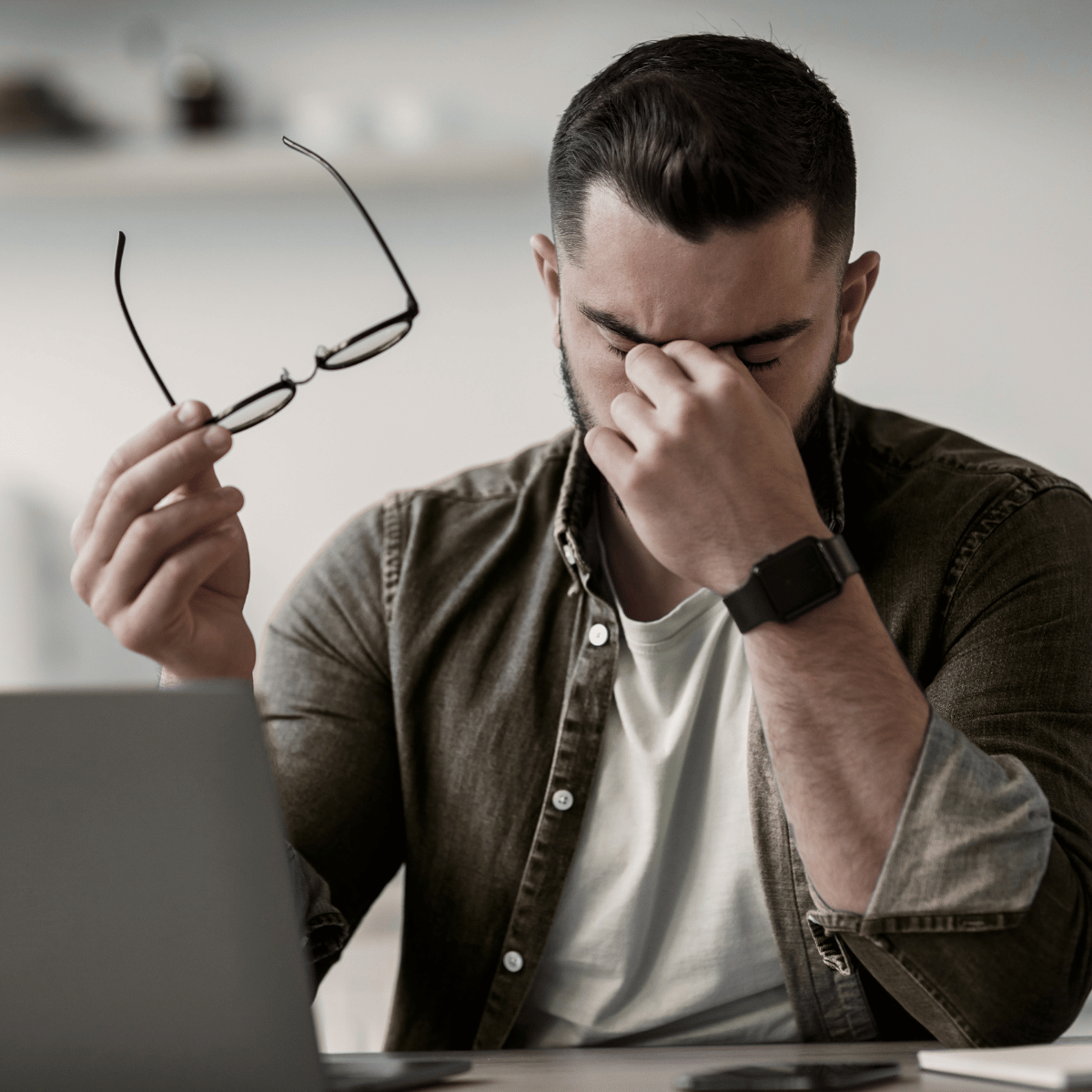
You went to bed at a reasonable hour. You slept through the night. You woke up feeling rested, but your eyes still feel tired after a good night’s sleep.
They feel heavy, strained, and exhausted before you've even opened your laptop.
If this sounds familiar, you're not alone.
Eye fatigue is one of the most common complaints among adults, and surprisingly, a good night's sleep doesn't always fix it.
Understanding why your eyes feel tired even after sleeping can help you identify what's actually going on and find real, lasting relief.
In this blog, we discuss why sleep doesn't always fix tired eyes, what's actually causing your eyes to feel exhausted, and what you can do to get real relief.
Eye Fatigue vs. Just Feeling Tired
There's an important difference between general tiredness and eye fatigue. When you're sleep-deprived, your whole body feels it. Your mind feels foggy, your muscles ache, and yes, your eyes feel heavy too.
But eye fatigue, also called asthenopia, is a condition where your eyes themselves are exhausted from overwork. You can feel wide awake and mentally sharp, but your eyes still burn, ache, or struggle to focus.
Eye fatigue happens because your eyes are constantly working throughout the day — focusing, adjusting to different light levels, tracking movement, and blinking to keep their surface moist.

When any part of this system is pushed too hard or too long without adequate rest, fatigue sets in
Why Sleep Doesn't Always Reset Your Eyes
Sleep is essential for eye health. While you rest, your eyes replenish moisture, reduce inflammation, and recover from the day's demands. But sleep alone can't fix the underlying factors that are causing your eyes to work overtime in the first place.
Think of it this way: if you ran a marathon every day without proper training or recovery, a single night's sleep wouldn't undo the strain.
Your eyes work the same way. If the conditions causing fatigue, including screen time, poor lighting, and an outdated prescription, remain unchanged, your eyes start each day already behind.
Several specific factors can cause eye fatigue that persists despite adequate sleep.
Understanding which ones affect you is the first step toward finding relief.
Common Causes of Persistent Eye Fatigue
Accommodation Fatigue
Your eyes have a built-in focusing system. The ciliary muscles inside your eyes contract and relax to adjust focus as you shift between near and far objects throughout the day. When you stare at a screen for hours at a fixed distance, these muscles stay locked in one position for extended periods.
Over time, this leads to accommodation fatigue, or a deep muscular exhaustion that one night of sleep may not fully resolve, especially if the same strain repeats the next day.
This is why many people notice their eye strain gets progressively worse as the workweek goes on, even with consistent sleep schedules.
An Outdated or Uncorrected Prescription
If your glasses or contact lens prescription is even slightly off, your eyes are quietly compensating all day long. Your brain and eye muscles work harder to sharpen blurry images, and this extra effort goes largely unnoticed until the fatigue accumulates.
By the end of the day, your eyes are drained, and because the same compensation starts again the next morning, sleep provides only temporary relief.

The American Academy of Ophthalmology notes that many people with eye fatigue symptoms have an underlying refractive error that hasn't been properly corrected. A comprehensive eye exam can rule this out or identify it as a contributing factor.
Digital Screen Use
Screen time is one of the biggest drivers of chronic eye fatigue. Research published in the National Library of Medicine shows that blink rates drop dramatically during screen use from a normal 15-20 times per minute to as few as 3-7 times per minute. Fewer blinks mean your tear film breaks down faster, your eye surface dries out, and your eyes work harder to maintain clear vision.
The close viewing distance of most screens also forces your ciliary muscles into sustained near-focus work, compounding the accommodation fatigue described above. The longer you spend on screens each day, the more this effect builds over time.
Dry Eyes
Dry eyes and eye fatigue are closely linked. When your eyes lack adequate moisture, every visual task becomes harder — your eyes strain to focus through an unstable tear film, and the resulting irritation triggers a low-grade fatigue that builds throughout the day. If you frequently notice your eyes feel tired along with dryness, scratchiness, or irritation, dry eye may be a contributing factor worth investigating.
Poor Lighting and Glare
Working in spaces that are too bright, too dim, or plagued by glare forces your eyes to constantly adjust. This ongoing struggle to find visual comfort adds to the overall fatigue load, especially during long work sessions.
How Screen Time Undermines Your Sleep
Here's where it gets compounding: the screens that tire your eyes during the day also interfere with the sleep that's supposed to help you recover at night.
Digital devices emit blue light, a high-energy wavelength that signals to your brain that it's still daytime. According to Harvard Health, blue light suppresses melatonin production more powerfully than other wavelengths of light, making it harder to fall asleep and reducing overall sleep quality.
So screens don't just exhaust your eyes during the day. They also compromise the very recovery period your eyes depend on. This creates a cycle that's difficult to break without intentional changes.
How to Relieve Tired Eyes
Start with immediate relief.
If your eyes feel exhausted right now, close them for two to three minutes to give your focusing muscles a break.
A warm compress held over closed eyelids for five minutes can also help relax the muscles around your eyes and stimulate oil production in your eyelid glands.
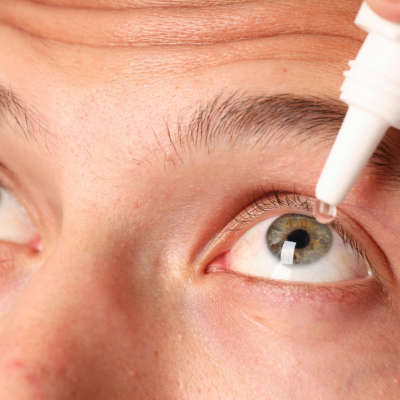
Preservative-free artificial tears can also restore moisture and reduce the irritation that contributes to fatigue.
Follow the 20-20-20 rule.
Every 20 minutes, look at something at least 20 feet away for 20 seconds. This forces your ciliary muscles to relax from near-focus work and helps reset your blink rate. Mayo Clinic optometrists recommend this as one of the most effective strategies for managing screen-related eye fatigue.
Adjust your screen setup.
Position your monitor 20-26 inches from your face, slightly below eye level. Reduce glare with an anti-reflective coating on your glasses or an anti-glare screen filter. Match your screen brightness to the surrounding room lighting — if your screen is significantly brighter or dimmer than your environment, your eyes are working harder than necessary.
Limit screens before bed.
Try to stop using digital devices at least 30-60 minutes before sleep. If that's not possible, use blue light filtering glasses or enable your device's night mode setting to reduce blue light exposure in the evening.
Get your prescription checked.
If you haven't had a comprehensive eye exam in the past year, make it a priority. Even small changes in your prescription can have a significant impact on daily eye fatigue.
When to See an Eye Doctor
While lifestyle adjustments help many people, persistent eye fatigue that doesn't improve with these strategies may signal an underlying condition that needs professional attention.
See an eye care professional if you experience:

- Eye fatigue that continues despite consistent lifestyle changes
- Frequent headaches, especially at the end of the workday
- Blurry or double vision that doesn't clear after rest
- Eye pain or persistent discomfort
- Difficulty concentrating due to visual strain
Digital Eye Strain Treatment in Fuquay-Varina
If tired, heavy eyes are a regular part of your day — even after a full night's sleep — it may be time for a professional evaluation.
At Fuquay Eye Care, we assess your screen habits, evaluate your vision, and develop a personalized strategy to reduce digital eye strain and restore your comfort.
Whether the issue is an outdated prescription, dry eyes, ergonomic factors, or a combination of causes, we help you identify what's driving your fatigue and build a plan that works for your lifestyle.
Schedule a comprehensive eye exam today and stop living with eyes that never seem to catch up.
Discounts?
Yes please!
Get more info about our VisionVantage program for discounted rates on services and eye wear.
Contact Us
We will get back to you as soon as possible.
Please try again later.
SHARE THIS