Are Contact Lenses the Same Prescription as Glasses?


By Dr. Teresa Pham August 11, 2025

If you’ve ever wondered whether you can simply use your eyeglasses prescription to order contact lenses, you’re not alone. Many patients assume that vision correction prescriptions are interchangeable, but this common misconception can lead to discomfort, poor vision, and even eye health complications.


While both prescriptions typically correct the same refractive errors, they differ significantly in their measurements, parameters, and how they interact with your eyes. Understanding these differences is crucial for maintaining eye health and achieving the clearest vision possible.

Why Glasses Prescriptions Aren’t as Simple as They Look


A glasses prescription isn’t just a few numbers on paper—it’s the result of precise measurements tailored to how your frames sit on your face. At our practice, we emphasize that getting a proper fit is just as important as the prescription itself. Ordering glasses online often overlooks this step, which can lead to less-than-optimal vision.


We use Optikam technology to ensure every pair of glasses is measured and fitted for you—not just your prescription. This instrument assesses 10 different parameters of fit, including:


  • Monocular PD
  • Near PD
  • Seg height
  • Pantoscopic tilt
  • Face-form
  • Rear-vertex distance
  • Frame geometry (A, B, ED, and DBL)


By gathering as-worn/position-of-wear data, we can tailor the lenses so they work with the exact position your frames sit on your face, ensuring optimal clarity and comfort. Just as glasses require precise fitting for the best results, contact lenses need their own specialized measurements and adjustments to provide clear, comfortable vision.

Key Differences Between Contact Lens & Glasses Prescriptions

While both contact lenses and glasses work to correct your vision, they do so in slightly different ways, requiring different prescriptions. 

Distance from Your Eyes

The most fundamental difference lies in the position of each type of correction relative to your eyes. Glasses lenses are positioned approximately 12 millimeters away from your eyes, while contact lenses sit directly on the cornea, separated only by a thin layer of the tear film.


This distance difference significantly affects how light enters your eye and requires different prescription strengths to achieve the same visual clarity. The closer the corrective lens is to your eye, the less power is needed to correct refractive errors.

Power Adjustments

Because of the distance difference, contact lens prescriptions typically require power adjustments compared to glasses prescriptions. For mild prescriptions (usually under ±4.00 diopters), the difference may be minimal. However, stronger prescriptions typically require more significant adjustments.


For higher prescriptions, contacts often need less minus power (for nearsightedness) or less plus power (for farsightedness) compared to glasses. These calculations allow for consistent vision correction, whether the lens sits on your eye or in front of it.

Additional Parameters for Contact Lenses

Contact lens prescriptions include several measurements that glasses prescriptions don’t require, including:


  • Base curve (BC): This measurement indicates the curvature of the contact lens back surface, typically ranging from 8.0–10.0 mm. The base curve must match your cornea’s curvature for proper fit and comfort.
  • Diameter (DIA): This measures the width of the contact lens from edge to edge, usually between 13.5 and 15.0 mm. The diameter affects how the lens centers on your eye and influences comfort and vision quality.
  • Brand and material: Contact lens prescriptions specify the exact brand and material type, as different manufacturers use varying designs and materials that can significantly impact fit and comfort.


Why You Need a Contact Lens Fitting

Simply converting your glasses prescription isn’t sufficient for contact lens wear. A comprehensive contact lens fitting evaluates multiple factors specific to your eyes.

Corneal Measurements

During a contact lens fitting, we will measure your cornea’s curvature using a keratometer or corneal topographer. These measurements help the contact lens base curve match your eye’s natural shape, preventing discomfort and maintaining proper lens movement.

Eye Health Assessment

Contact lenses directly touch your eyes, making a thorough eye health evaluation essential. We can examine your tear film quality, check for dry eye conditions, and assess whether your eyes are suitable for contact lens wear.

Lifestyle Considerations

Your daily activities, work environment, and personal preferences all influence contact lens selection. Someone who works long hours at a computer may benefit from different lens materials or wearing schedules compared to an active athlete.

The Importance of Professional Fitting

Attempting to self-convert prescriptions or ordering contacts without proper fitting can result in:


  • Discomfort and irritation from poorly fitting lenses
  • Blurred or fluctuating vision from incorrect power or unstable lens position
  • Eye health complications, including infections, corneal abrasions, or chronic inflammation
  • Reduced wearing time due to discomfort


At Fuquay Eye Care, our comprehensive contact lens fittings facilitate comfort, vision, and eye health. We take the time to properly measure your eyes, discuss your lifestyle needs, and find the perfect lens for your unique requirements.

Understanding Prescription Formats

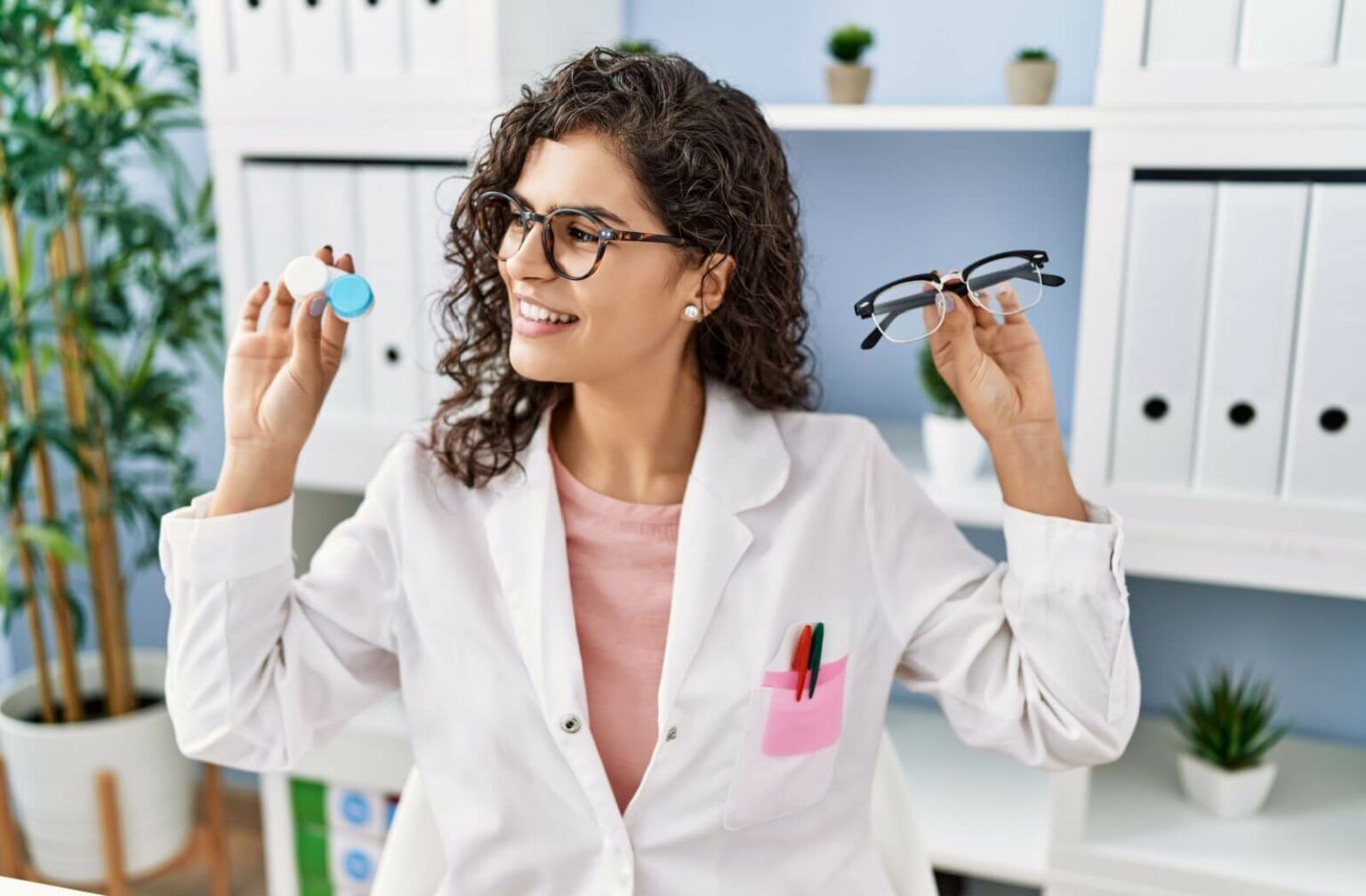
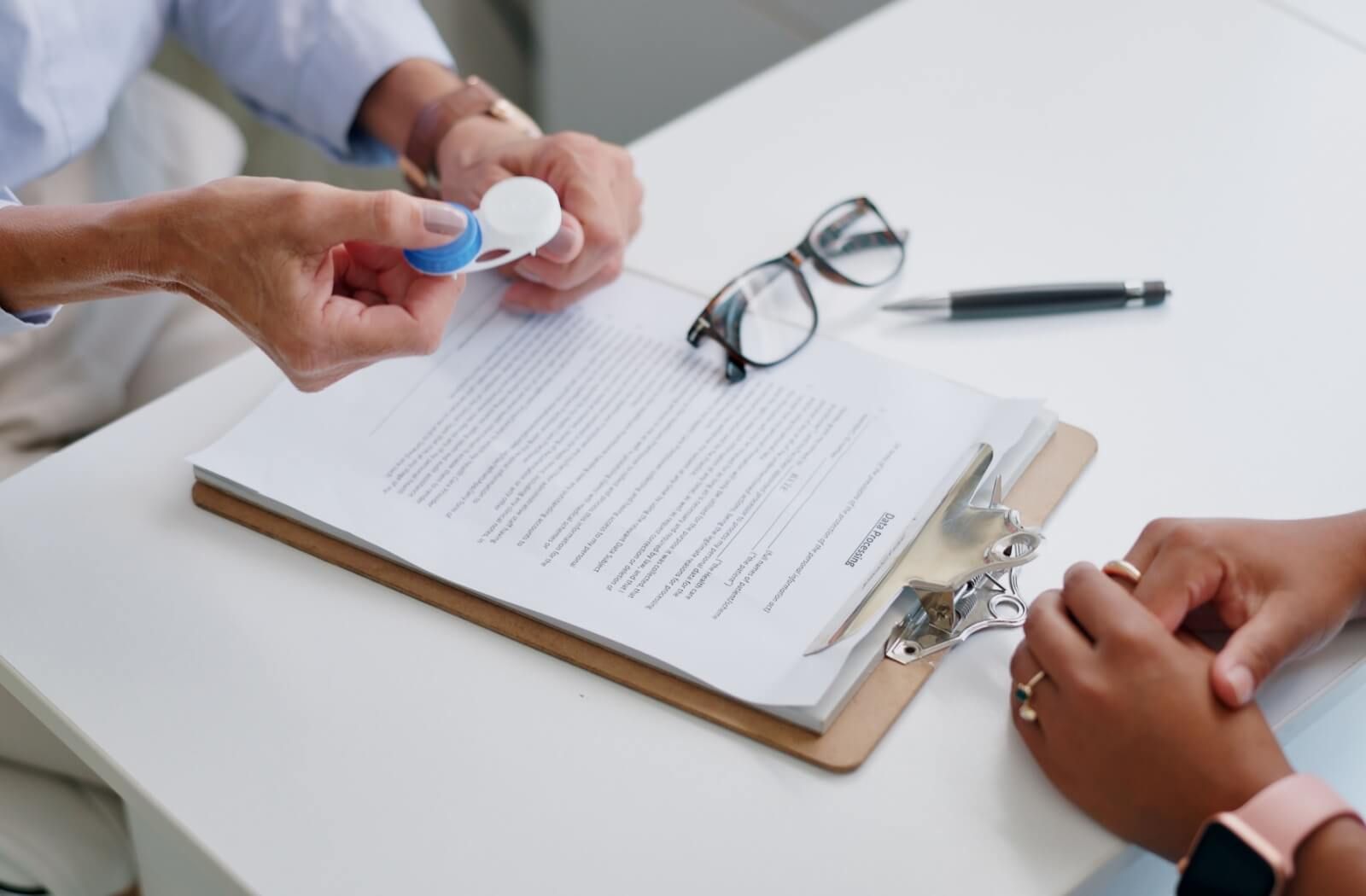
Image of a pair of hands holding a pair of contact lenses and another pair of hands folded near note pad

When you get your prescription for eyeglasses or contact lenses, you may not know what it means. Here are some components you may see on a prescription: 

Glasses Prescription Components

A typical glasses prescription includes:


  • Sphere (SPH): Corrects nearsightedness or farsightedness
  • Cylinder (CYL): Corrects astigmatism
  • Axis: Indicates astigmatism orientation
  • Add power: For bifocal or progressive lenses
  • Pupillary distance (PD): Distance between your pupils


Contact Lens Prescription Additions

Contact lens prescriptions contain all the glasses prescription information plus:


  • Base curve (BC)
  • Diameter (DIA)
  • Brand/material specification
  • Wearing schedule recommendations
  • Replacement frequency

Making the Right Choice for Your Vision

Both glasses and contact lenses offer excellent vision correction when properly prescribed and fitted. The choice between them often depends on personal preference, lifestyle factors, and eye health considerations.


Contact lenses provide a wider field of view, don’t fog up in weather changes, and offer freedom during physical activities. Glasses, however, require less maintenance and don’t carry the same infection risks associated with contact lens wear.

Your Next Steps to Clear Vision

Understanding that contact lens and glasses prescriptions aren’t interchangeable is the first step toward making informed decisions about your vision correction. 


At Fuquay Eye Care, we’re committed to providing personalized vision solutions that fit your needs. Our experienced team will work with you to provide proper fitting for comfort and clarity. Schedule a comprehensive eye exam and contact lens consultation to explore your options and find the perfect solution for your visual needs.

Find the

perfect glasses

Browse our selection of

Fuquay Eye and Designer Frames


Discounts?

Yes please!

Get more info about our VisionVantage program for discounted rates on services and eye wear.

Contact Us

SHARE THIS

Latest Posts

Contacts, glasses, and eye chart screen representing what vision insurance providers currently provide and visionvantage
By Dr. Theresa Pham December 11, 2025
What Are the Most Common Vision Insurance Providers? 
image of a woman with droopy eyelid representing how to fix droopy eyelids without surgery
By Dr. Teresa Pham October 28, 2025
We explore treatments for droopy eyelids without surgery, such as medicated eye drops, lifestyle adjustments, targeted exercises, and triLift therapy.
Doctor in blue scrubs and a man in a gray suit, representing the concept of How long does an eye exam take.
By Dr. Teresa Pham September 23, 2025
How long does an eye exam take? Most eye exams take between 30 minutes and an hour, depending on several factors explained in this blog.
Image of a child looking closely at a phone screen in the dark represetning what causes myopia to worsen
By Dr. Teresa Pham July 3, 2025
What Causes Myopia to Worsen? We explore a range of factors myopia progression, including genetics, age, screen time, and a lack of outdoor activity.
Woman having IPL procedure on her face
By Dr. Teresa Pham June 30, 2025
We explore how IPL helps wrinkles on the face by stimulating collagen production and improving overall skin texture, reducing fine lines and wrinkles.
Woman in yellow jacket blowing her nose outdoors, representing whether allergies cause dry eyes
By Dr. Teresa Pham May 27, 2025
Can allergies cause dry eyes? In this blog, we explore the relationship between allergies and dry eye syndrome.